If you have been decluttering and have decided whether to keep or remove items from your home, You will be faced with roughly two very large piles:
1. The items you keep and will need to organise don't worry about that for now.
2. Items that are in good condition that you won't need anymore.
These last items are clutter to you and need to leave your house.
So how do you get rid of the clutter in pile two?
Give it away

The easiest way to give items away is to take them to the nearest second-hand shop. For most of my own declutter sessions, and those with clients, I finish with a car full of stuff and drive it straight to the second-hand shop, which creates a sense of completion and relief! It is by far the easiest way to get rid of clutter. You might feel a bit anxious the first few times you drop stuff off, but it gets a lot easier over time.
Another way to get rid of clutter (while still keeping items nice and usable) is to give them to friends or family. This idea is lovely, but it is the least reliable. When will you next meet your friend or relative? Will you remember to give it to them when you see them? I tend to forget, so the risk is that the item could sit in your space for months. Also, your friend might not want to tell you they see the item as clutter. "Oh, you really shouldn't have" is sometimes code for “Please don't give me your clutter”.
How to get rid of clutter and get paid?
Yes, you can sell your items online. However, I normally advise against it or suggest you outsource (to the nearest teenager with a phone and an eBay account). I am assuming you are here because you want more space, time, and less clutter. Although selling items online is an avenue to achieve this, it is also a massive project in and of itself.
Making photos, setting up an account, and monitoring people who want to buy it. If you haven't done this before, have limited IT skills, and you calculate what your time is worth. You will most likely save more time and money by donating the items.
Recycling
Clearly, not everything can be given away; some items have lived their life and need to be disposed of. Therefore, we need to dive into the world of recycling
One way to get rid of a significant amount of stuff is to fill your car and drive to the nearest tip. For a small fee, they can literally take the load off your shoulders. A lot of councils also offer a whole range of recycling options (often free).
Example of how to get rid of clutter for tricky items:
At my local council tip, they take electronics, cardboard, and some furniture; if your items don't fit into any of these categories, they go to the landfill.
Some larger businesses have specific ways on how to get rid of clutter
In Australia, more and more companies are offering recycling services (some have gotten there kicking and screaming; others are much more proactive).
Here are some examples of how to get rid of clutter with specific needs:
Batteries -Officeworks and Aldi accept these
Plastic bags — Coles and Woolworths have moved away from plastic bag recycling bins in favour of paper bags
Clothes - H&M and others have an initiative where they take your old clothes and give you a discount voucher for every bag of old clothes you drop off.
Computers/printers etc. - Officeworks again has an extensive recycling wall; you place the item in the right bin
Bottles -Woolworths has automated units where you can bring your bottles. You get a few cents per bottle, but it could add up (you could also outsource this task to a child or incorporate it into your regular grocery shopping).
Pick-up services
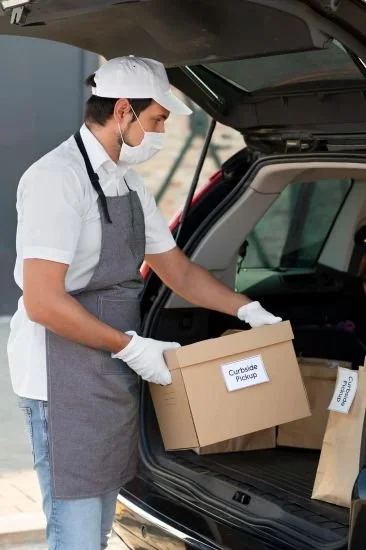
Several companies or councils offer pick up services here are some ideas:
The 2nd hand shop, most of them have a number of trucks with strong guys driving around the region to pick up for example; bed-frames, furniture or simply a large volume of items.
If this is your choice on how to get rid of clutter you own, You will need to call them and book in but this tends to be 5 minutes very well spend and it is a way that allows you to get rid of clutter very quickly. (Phone call, a date for pick up often within the week and you have your space back).
How to get rid of clutter in your area?
Locally, where I live, we have initiatives like soft-landing you pay $25 dollars per mattress. They pick up, reuse and recycle the mattress in the most environmentally friendly way possible. Not only are they making things better for the environment, but also providing jobs for people who are less fortunate than you and me. Over the years, it's been amazing to see how many people ask how to get rid of clutter, meaning their mattress; people can keep a mattress in their hallway, spare bedroom, or garage for years. This initiative saves the mattress clutter problem with one phone call.
Another initiative in my local area for getting rid of paperwork clutter is shredding with Flagstaff, an organisation that hires people with disabilities. For less than $10,- dollars I can get a box of papers securely shredded. The people who work here are amazingly friendly and proud of their work.
How to get rid of clutter in bulk: use your local council's services. Most councils offer one or two free council pick-ups per year. Once you have done a decent declutter, book a time and watch them take it away within a week for free. In most cases, this means the material goes to landfill, so I like to explore other recycling and reuse options first.
How to get rid of clutter Country specific?
Note that the execution of these steps (in terms of where) can be very country-specific. I would love your tips and insights if you live in another part of the world from me (Australia, an hour south of Sydney).
In this video I talk a little more about responsible organising.
Before we wrap up, let's talk about guilt
Clearly, you are a switched-on individual, and you know how to get rid of clutter (though I hope I have shown you some new ideas, too). But most of us, myself included, feel guilty when we get rid of clutter.
Let’s talk about a few reasons why:
Some of us are baby boomers; a lot of us are the descendants of baby boomers. That means there's a strong link to people who knew tough times. Those who couldn't throw anything away and needed to hold onto every item ever purchased.
As you know, this is not the world we live in. So we have a mix of incredible guilt and responsibility to hold onto items. Within a world that has moved to mass consumerism, with items that are simply not designed to last forever.
We are finally told that the fate of the earth lies in our hands; we pollute too much and need to recycle more. This puts us in a very difficult, emotional, psychological, sociological and environmental situation.
I don't have all the answers on this, and I do feel guilty when I have bought a product that didn't work, or I have to dispose of something no longer useful. I know, however, the more you declutter and organise, the less you will buy and pollute the world in the future. You will have more money and time and can invest in better, longer-lasting, sustainable products.
How to get Rid of clutter and Guilt - The way I see it is:
If you become more responsible in what you buy, how much you buy and how you dispose of items. You are doing more and a better job than if your estate needs to be cleaned up by a dump truck a few decades from now.
Where from here?
What's your best tip for getting rid of clutter?
Do you know of any amazing recycling schemes in your country, city, or neighbourhood?
Let me know, and explain how this will help people trying to get rid of clutter.

Learn more about How to get rid of clutter.
My first book will walk your through the process and emotions of how to declutter.
Frequently Asked Questions
-
Donating to your nearest second-hand shop is usually the simplest option — you can drop items off immediately rather than waiting to give them to friends or family, which is far less reliable.
-
Many retailers run their own programs — Officeworks and Aldi take batteries, H&M; takes old clothes for a discount voucher, and Woolworths has bottle return machines. Your local council also offers free recycling and pick-up services for larger items.
-
For most people, no. Photographing, listing, and managing buyer messages takes real time and effort. Unless the item has significant resale value, donating is usually faster and just as effective for clearing space.