Organise Your Medicine Cabinet and First Aid Kit
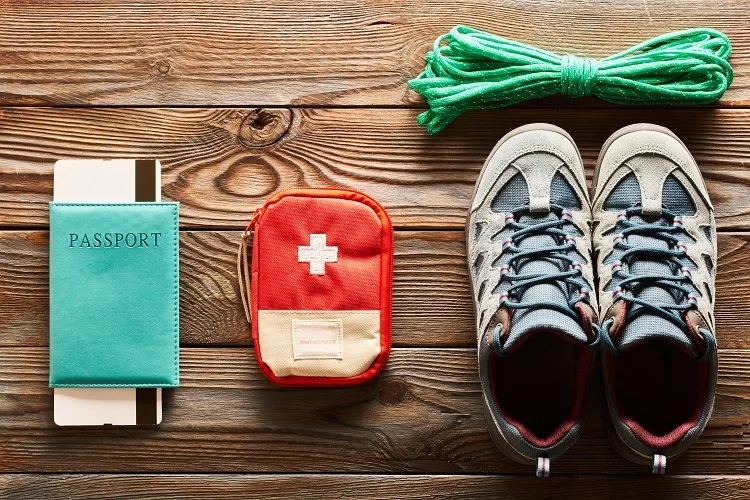
Every home needs a first aid kit ready to go. How to organise your medicine cabinet and first aid kit is mainly up to you and your situation, but it needs to be clear and easy. Plus, every (adult) needs to know about it.
What medicine and first aid material do you have?
As with any organising project, get all your medicines, Band-Aids, creams, etc. together.
How much do you have?
Do you need to keep it all in the same place?
Place items where you need them
Normally, I am in favour of keeping all the same grouping items together, but in this case, you need to focus on where and when you need these items.
You might want to keep creams and lotions in the bathroom in their own container
Band-Aids and any first aid supplies need to be very easily accessible.
For us, this means we have several locations:
Lotions and potions are person-specific, and each family member keeps them in their room – next to their bed or in their bathroom drawer.
The actual location of the organised medicine cabinet and first aid kit in our home
Depending on your family situation, you may need to adjust where you keep these first aid items. With small kids, you'll likely keep these items up high. For me, with older kids, having a drawer – easy access is great, as they can attend to most minor cuts themselves.
Type of first aid kits to organise
Organising first aid kits is important; for a long time, I was not prepared with any first aid kit. This was because I felt I had to set up the “perfect” medicine cabinet. The thing is, if you have a number of key things that you will need 90% of the time, you are still 100% more prepared than if you don’t have a first aid kit.
You can purchase premade first aid kits – for a while, when money was very tight, I couldn’t afford one. There is nothing against creating your own first aid kit (unless it is work- and legal-requirement-related, in which case money should be a problem).
Even now, when I buy a pre-set first aid kit, I add Band-Aids and Betadine, since we need them all the time.
Below I will talk through a number of medicine cabinets and first aid kits you can organise.
Where to set up a first aid kit:
At home
In the car
For outdoor activities
In the office
At home
We have a central drawer in our kitchen (the 4th drawer, the one that is normally either empty or messy with nothing specific).
This drawer has everything we need for first aid: Band-Aids, Betadine, gauze, headache tablets, antihistamines, etc. It has several containers to group items; overall, you can find what you need in 30 seconds, and it has materials that will help with 90% of small first-aid needs.
In the car
In this video, I show you how I set up my own first aid kit in the car. It has come in handy on several occasions. It is a nice feeling that, if there were to be an accident, I could help as a first responder and that I have some helpful gear with me.
For a hike
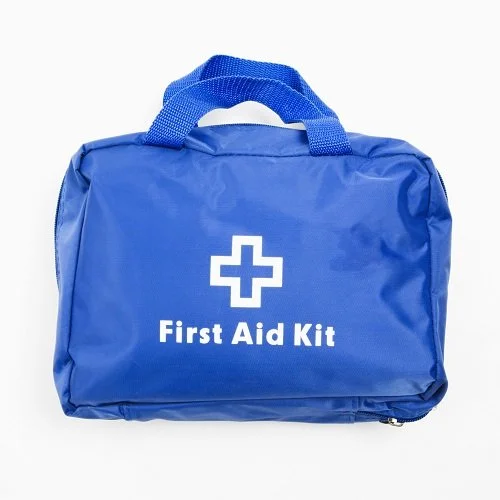
We do a number of sports and hikes so a small first aid kit for these outings doesn’t go astray. In this one, I include some other items like blister pads, and a pressure immobilisation bandage for snake bites. You would do anything to prevent getting a snake bite but if someone gets bitten better to have something ready.
In the office
Clearly, every office is required to have a first aid kit. Having read this article you might want to familiarise yourself with what is in there. Who is in charge of this? Are things still in date?
Again coming back to this perfectionism I rather have an “expired” Band-Aid than none when I cut myself.
Other things that come in handy in the office is having headache and allergy tablets which is the most common office “injury”.
How to organise your medicine cabinet and first aid kit in summary
I hope this article got you thinking about how to organise your medicine cabinet and first aid kits. This is one of these organising things you can make a start and keep on improving over time. It is like insurance, you don’t need it until you do and then you are glad you invested in it and set it up in the first place.
Happy organising.

Like this page?
How to Organise Your Home and Paperwork covers systems like this one in detail — practical, step-by-step, built for real life.
Frequently Asked Questions
-
Band-Aids, betadine or antiseptic, gauze, headache tablets, and antihistamines cover most everyday needs. You don't need a perfect kit to start — having the basics ready is far more useful than waiting until you have everything.
-
Somewhere easily accessible for adults but out of reach for young children. A dedicated kitchen drawer or bathroom cabinet works well for most households — the key is that everyone in the home knows where it is.
-
Yes, if you use different spaces regularly. A kit at home, one in the car, and a smaller one for hikes or outdoor activities each serve a different need — outdoor kits should include extras like blister pads or a pressure bandage for snake bites, depending on your location.