In the midst of the hustle and bustle of daily life, it's easy to lose sight of the importance of staying organised. While the chaos of the holiday season may be upon us, taking a moment to reflect, relax, and plan for the upcoming year can make a significant difference. In this post, we will delve into the world of yearly calendars, exploring different formats and strategies to help you find the perfect tool that suits your needs.
The Importance of a Well-Designed Calendar
As each year is coming to a close, many of us find ourselves evaluating the effectiveness of our current planning systems. Do you have a calendar on the wall, or perhaps separate ones for home and work? Is your preference electronic or paper-based? The key takeaway here is that there is no one-size-fits-all solution. The crucial factor is that your chosen tool works seamlessly with your lifestyle.
Personal Experience: Crafting a Custom Calendar when the kids were small.
Reflecting on my own experiences, I've experimented with various calendar formats over the years. However, with the demands of work commitments reaching new heights and the complexities of managing children's schedules, I found it necessary to take a different approach in 2015. I decided to create my own comprehensive calendar system.
My custom calendar includes a year-at-a-glance overview, a birthday calendar, a monthly calendar, a monthly achievement tracker, a week-at-a-glance section, and individual daily breakdowns. This all-encompassing tool allows me to efficiently manage work tasks, keep track of my children's schedules, and maintain a sense of sanity in the midst of a busy life. While the size may be imposing, I only need it when sitting at a desk; for everything else, there are trusty Post-it notes.
Paper-based and electronic calendars
Fast forward to today, I still use yearly calendars on the wall and electronic calendars for the week-to-week, day-to-day information. The big yearly calendars allow you to see the big picture for the whole year, and the electronic versions allow you to work on the details, change things on the fly and now that the kids are older, I can easily share some of the events with them in electronic calendar format as well.
What to Include in a Yearly Planner
Whether you buy a yearly planner or make your own template, these are the sections I find most useful:
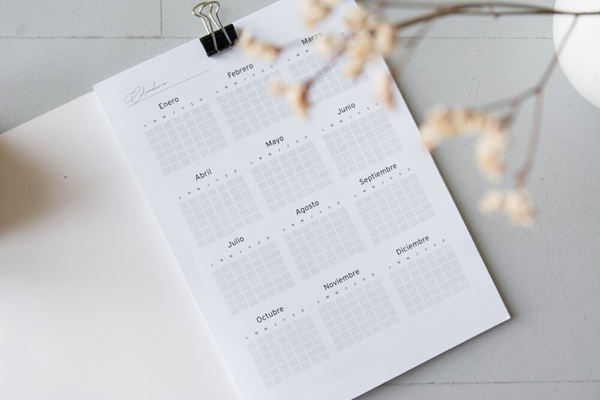
Year-at-a-glance overview
Birthday calendar (if you track these)
Monthly calendar
Monthly achievement tracker
Week-at-a-glance
Daily breakdown
Start with the year-at-a-glance so you can see school holidays, birthdays and big deadlines in one place. Then add the detail in your electronic calendar.
Tailoring Your Calendar to Your Needs
While crafting your own calendar may not be necessary for everyone, it prompts an essential question: What do you need to plan and thrive in the coming year? Life evolves, and so do the demands on our time. Taking the time to evaluate and select a planning tool that suits your evolving needs is a key investment in your future productivity and well-being.
As we approach the end of the year, don't let the chaos of the present moment overshadow the importance of planning for the future. Whether you opt for a traditional wall calendar, a digital planner, or even a customised creation like mine, the key is to find a system that aligns with your unique requirements. By investing in an effective calendar, you're not just organising your days – you're setting the stage for a more productive and fulfilling year ahead.
Supercharging your yearly calendar with Goals and Achievements
Over time, I have become a strong advocate (and practitioner) of LifeBook to help you set up your ideal life, goals, ambitions, and how you want to show up daily, weekly, quarterly, and yearly in every area of your life. I complement my LifeBook with my Bullet Journal (BuJo) to track how things are going and decide whether to celebrate, take a break, or push a little harder on some goals. You can work both forward on what you want to achieve and backward on what you have achieved this year, quarter, month or week. Write it down in a way that makes sense to you, utilising your calendar to help you remember both what you have achieved and what you want to achieve in future.
Note: Part of this article was originally an Illawarra Mercury article updated and refreshed in 2022.

Want to get organised this year?
Organising Unpacked is a great starter book. It shows you where to begin, one simple step at a time.
Frequently Asked Questions
-
Use both. A big paper calendar on the wall shows the whole year at a glance, and an electronic calendar is better for the day-to-day detail. It is easy to change and to share with family.
-
A year-at-a-glance overview, a birthday calendar, a monthly calendar, a monthly achievement tracker, a week-at-a-glance and a daily breakdown. You don't need all of them, so start with what you really use.
-
The end of the year is a good time. However if you have time energy and are inspired, start now.
Look at what worked in your current system, think about what you need for the coming year/months, and set up your calendar for the time ahead.