You are here because you want to find the best way to organise your home.
If I was facing a real messy house and "everything" needed to be organised.
This would be my best way to organise.

I would start with the following:
1. Have food ready
2. Declutter, clean and organise
3. Focus on specific spaces or items
4. Learn how to run an organising session
Below I will explain all of these steps in detail.
Best way to organise
Tip 1 - Have food ready
Without food we will perish very quickly, the better and healthier you can feed yourself the better you will feel after you (challenging) declutter and organising sessions. Possibly get some healthy take-away, rely on fresh salads or a nice soup. The last two options won’t break the bank and can keep you going on the days you declutter and organise.

Tip 2 - Declutter, Clean and Organise
One of the best ways to organise is to declutter first.
Declutter can be easier said than done, as even if you decide not to keep an item, you need to make another decision on how, when and where you will dispose of the item.
When you dislodge things, I suggest you quickly clean as you go.
After which you will be left with items you want to keep and need to find "homes" for them.
I like to show that the best way to organise is really a variety of different steps: declutter, clean and organise. After a bit of practice, you can combine decluttering and organising in a session, or do them very close together.
Tip 3 - Focus on specific spaces or items
When I was working as a Professional Organiser in people’s houses, I would always pick the space that would have the most impact. What this means is that I would look at which room is used most. And tackle these spaces first.
Another way to do this is to focus on specific items, clothes, for example. Sometimes the best way to organise is to look at all the clothes that are in your home. This simple focus will lead you into the wardrobe, decluttering your clothes, organising them and setting up a system to keep clothes flowing from the laundry to your closet.
When you focus on a specific space or items, you will get this wonderful momentum that will remind you of your organising success days after you have put in the effort.
Tip 4 - Learn how to run an organising session
Don’t work for too long
When working as a professional organiser, I would never work for more than 3 hours at a stretch. Most sessions were half-day, 4-hour sessions; occasionally there were two longer sessions. If you do full days of organising, recovery that night or the day after is important.
Sometimes I would arrive with a coffee, or if I worked a full day with my client, we made sure we had time for a solid lunch. It is tempting to skip this step, but without it you won't last long in the long term, and if you have nice breaks you start to associate organising and decluttering with positive feelings. You start to see that your hard work has visible rewards in your space, that you get nice, well-deserved breaks, and you develop an optimistic view of how you are travelling and feeling in regard to the things you are organising and your organising goals. So plan ahead, when will you have a break, what or where will you eat when you are exhausted.
Set a regular time and day
When working with clients, I often had a regular day and time on a weekly or fortnightly basis. This is one of the best ways to organise, as it is really good to keep momentum going over a longer period of time; all you need to check is what day it is, and you know it is organising time. Another way of doing this is shorter stints of intense organising like "a declutter weekend" or "the 3-day declutter and organise".
Have breaks
When organising, it is important to have breaks, and if you like, utilise these breaks.
It could be a great use of your time during your organising session breaks to drop items off to either a second-hand shop or to the tip.
You might need to go shopping for storage solutions for the items’ final "homes".
Both these things get you out of the house and still moving forward with your organising and decluttering efforts.
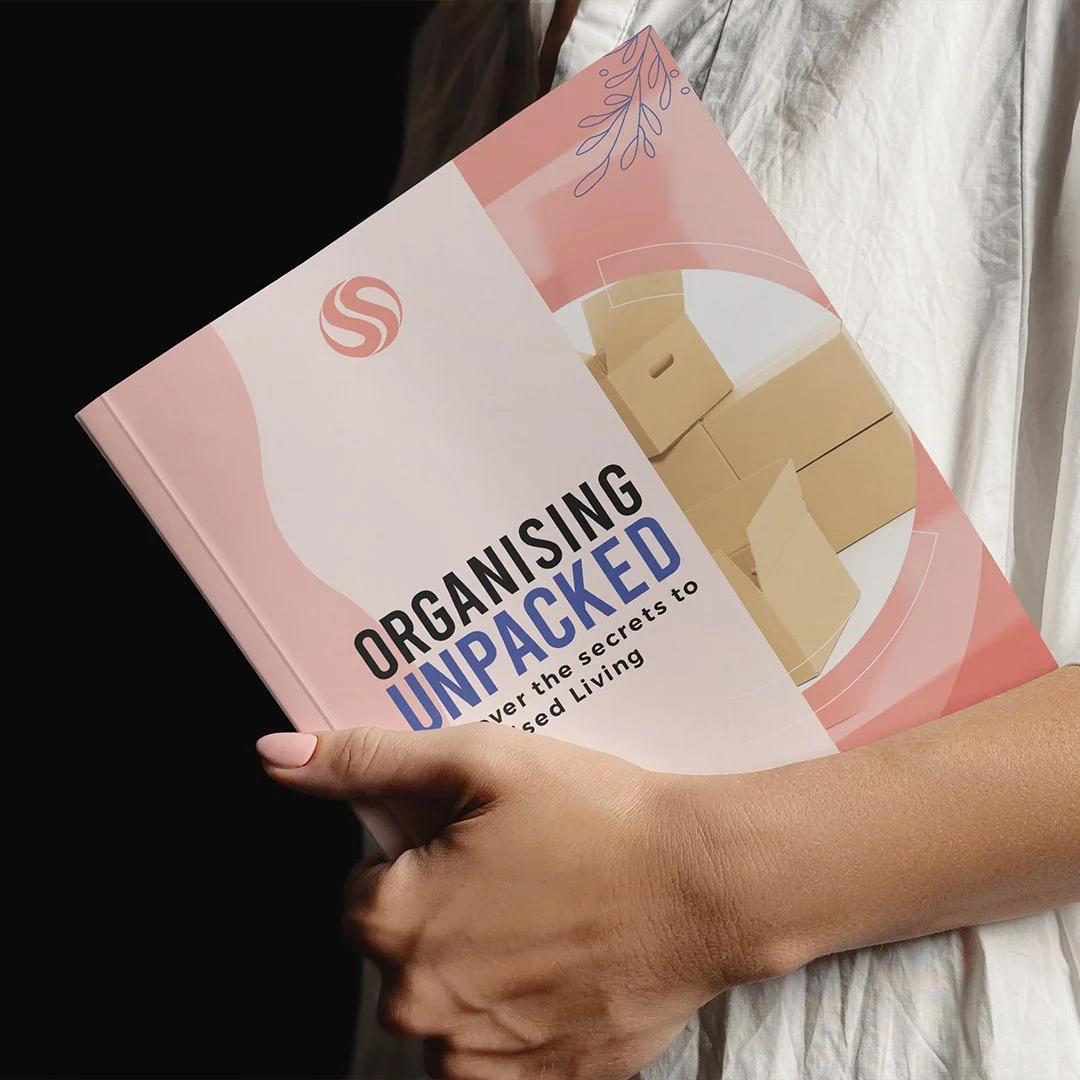
New to organising?
Organising Unpacked is a great starter book. It shows you how to begin, one simple step at a time.
Frequently Asked Questions
-
Start with food and breaks so you have energy, then declutter, clean and organise. Pick the room you use most and work on one space at a time. Short, regular sessions work better than one huge day.
-
I never worked more than 3 hours at a stretch with clients. Half-day sessions of about 4 hours worked well, with a break and a proper lunch. If you do a full day, plan time to recover.
-
Yes. Decluttering first means you only find homes for the things you want to keep. Clean as you go, then organise what is left. With practice you can combine decluttering and organising in the same session.